Saving Lives. Protecting Property. Preserving the Planet.
Saving Lives. Protecting Property. Preserving the Planet.
Modern fire risks require modern fire suppression technology. Trident delivers multi-class protection from a single water-based agent — including lithium-ion battery fires.
Trident is a water-based fire extinguishing agent, formulated from synthetic and natural raw materials and used in dilution with water. It is not an AFFF product.
Plain water is limited by its own surface tension: it beads and runs off the surface of a fuel before it can remove much heat. Trident reduces surface tension to approximately 20 mN/m, which lets the diluted agent spread and penetrate into the burning material.
The result is faster, deeper cooling with less agent and less water. On liquid fuels the agent also forms a film that separates fuel from oxygen. On lithium-ion cells, that same heat-removal behaviour is what reduces the risk of reignition.
Because the formulation contains no fluorine or PFAS compounds, is biodegradable to OECD 301 F and is classified WGK 1, that performance does not come at the cost of a persistent environmental footprint. It is a professional-use product, and we advise on dilution and application for each environment.
Conventional suppression forces a series of compromises — on coverage, on clean-up and on environmental impact. Trident was formulated to remove them.
Select a classification to see how the Trident agent is applied to that fire type.
Trident’s low surface tension allows the diluted agent to penetrate deep into solid fuels rather than running off the surface. This cools the fuel bed, wets unburnt material and helps prevent the fire re-establishing itself.
Applied in dilution, Trident forms a film over the liquid surface that separates the fuel from oxygen while cooling the fire. It performs this role without relying on fluorinated AFFF chemistry.
For gas-fuelled incidents the priority is controlling the fire and cooling surrounding plant and structures so the fuel supply can be isolated safely. Trident is rated for use on Class C fires.
Metal fires burn at very high temperatures and demand rapid, high-volume heat removal. Trident is rated for Class D fires and is applied to absorb heat and bring the reaction under control.
Deep-fat fires re-ignite easily if the oil is not cooled below its auto-ignition temperature. Trident’s cooling performance and surface film make it suitable for Class F applications in commercial kitchens.
Lithium-ion fires are driven by internal heat generation, which is why they are so prone to reignition. Trident works by absorbing heat and cooling the cells rapidly, suppressing the fire and reducing the risk of it restarting.
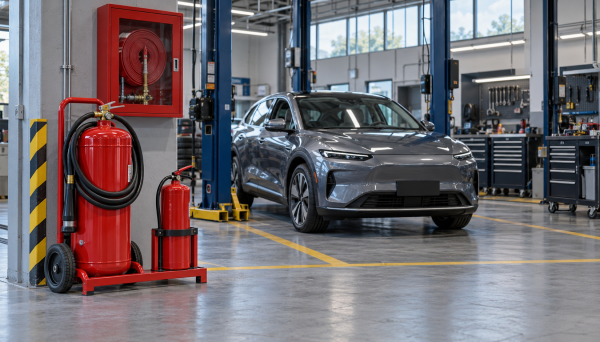
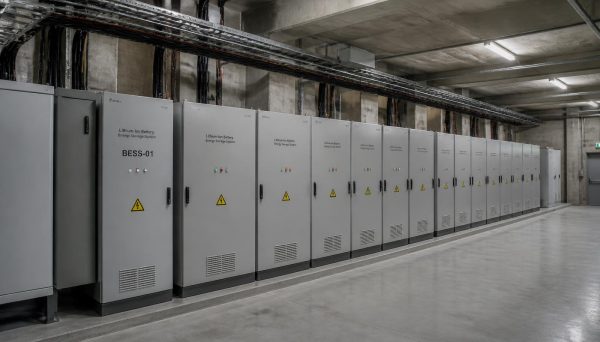
Electric vehicles, battery energy storage, data centre back-up systems and battery manufacturing have introduced a fire risk that behaves differently to anything in a conventional fire plan.
A failing cell generates heat internally and propagates to neighbouring cells.
Stored energy and released gases feed rapid, high-temperature burning.
Pressure build-up in sealed packs and enclosures creates a blast hazard.
Residual heat can restart the fire long after visible flames are out.
Occupants, responders, plant and stock are all exposed during and after the event.
The incident is identified and Trident is deployed manually or through a fixed or mobile suppression system.
The agent absorbs heat quickly, driving temperature down inside and around the affected cells.
Flames are knocked down and the burning material is wetted and cooled rather than simply covered.
Because the heat is removed rather than trapped, the likelihood of the battery re-igniting is reduced.
People, surrounding property, plant and stock are protected, with less residue and clean-up afterwards.
The agent’s safety profile is part of its specification, not an afterthought.
The agent is not classified as harmful to health in normal use.
Trident is not classified as skin-irritating.
Classified WGK 1 — the lowest German water hazard classification.
A pH of approximately 7.3 means the agent is close to neutral.
At a 0.2 % mixture the agent is used to bind and wash out smoke and dust particles.
No fluorinated surfactants or PFAS compounds are used in the formulation.
Trident is a water-based extinguishing agent, used in dilution with water. It is not an AFFF product.
Formulated from synthetic and natural raw materials, free of fluorine and PFAS compounds, and biodegradable to OECD 301 F.
Extremely low surface tension lets the agent penetrate and wet the fuel quickly, cooling and knocking down fire far faster than plain water.
One agent for Class A, B, C, D and F fires, as well as lithium-ion battery fires.
Rapid heat absorption and cooling reduce the risk of reignition in lithium-ion battery fires.
Leaves minimal residue behind, which reduces clean-up, water damage and downtime after an incident.
Classified WGK 1 (low hazard to water), non-toxic in use and not classified as hazardous to health or skin-irritating.
A shelf life of up to 10 years, with formulations rated for operation down to -5 °C and Arctic variants to -40 °C.
Tell us about your site, your fire risk and your operating conditions, and we will help you identify an appropriate Trident solution.