Saving Lives. Protecting Property. Preserving the Planet.
Saving Lives. Protecting Property. Preserving the Planet.
Fire protection solutions for environments ranging from individual applications to large-scale industrial systems.
Trident is supplied across four product families. All capacities shown are the sizes available from Trident Africa.
Ordinary Combustibles
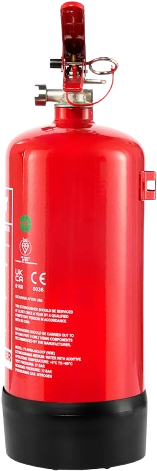
Small-format Trident extinguishers for personal, residential, vehicle and small-business protection where a fast first response matters most.
1 L · 2 L · 4 L
Homes · Vehicles · Offices · Small business premises
Commercial Extinguishers
Medium-capacity units for commercial and light industrial premises, sized for the coverage typically required by workplace fire plans.
6 L · 9 L · 12 L
Retail · Commercial buildings · Workshops · Light industry
Industrial Trolley Units
Wheeled, high-capacity units for larger fire loads and higher-risk industrial environments where extended discharge is required.
25 L · 50 L
Warehousing · Manufacturing · Refineries · Heavy industry
Fire Agent Containers
Trident fire agent supplied in bulk for refilling, system charging and standing reserves, up to IBC quantities.
5 L · 20 L · 200 L · 1 000 L (IBC)
Refilling · System charging · Reserve stock · Fleet and depot use
The agent is compatible with mobile and fixed systems, which allows it to be standardised across portable units and permanent installations on the same site.
Trident can be charged into fixed automated fire suppression installations protecting plant, rooms and enclosures.
The agent can be used in sprinkler installations in place of plain water to improve cooling and penetration.
Integrated with hydrant systems using 3 % inline induction.
Deployed on mobile suppression units for rapid response across large or changing sites.
Used by fire services on appliances, in both mobile and fixed configurations.
Compatible with compressed air foam and ultra-high-pressure skid systems.
Each environment carries a different dominant fire risk. The table below sets out where Trident is relevant.
Mixed fire loads across solids, flammable liquids and machinery.
One agent covering Class A, B, C, D and F risks, from portable units to fixed systems.
Fuel, oils and lithium-ion traction battery packs.
Rapid cooling of battery packs to suppress fire and reduce reignition risk.
Flammable liquids and gases, with high heat and rapid escalation.
Class B and C capability with high-volume trolley units and hydrant induction.
Dense stacked combustible stock and packaging.
Deep penetration into solid fuels, with reduced residue and water damage to stock.
Fuel fires and rapid-response requirements on and around aircraft.
The agent is rated to ICAO Level B and can be deployed from mobile and appliance systems.
Electrical plant and lithium-ion battery back-up systems.
Cooling-led suppression for battery rooms with minimal residue for faster recovery.
Continuous occupancy with limited tolerance for smoke and contamination.
A non-toxic, low water-hazard agent that also binds smoke and dust particles.
Unpredictable, multi-class incidents in the field.
Appliance, CAFS, UHP and skid compatibility with a single multi-class agent.
Diverse property portfolios and public safety obligations.
Standardised protection across facilities, with ISO 9001 and ISO 14001 certified backing.
Offices, retail and hospitality with kitchens and electrical risk.
Safety and Economy Class extinguishers, including Class F cooking-oil protection.
The values below are the published technical characteristics of the Trident fire extinguishing agent.
| Property | Value |
|---|---|
| Product type | Water-based extinguishing agent (not an AFFF) |
| Composition | Synthetic and natural raw materials |
| pH value | Approx. 7.3 |
| Density at 20 °C | 1.01 – 1.05 g/cm³ |
| Surface tension | Approx. 20 mN/m |
| Water solubility at 20 °C | Completely soluble |
| Water hazard class | WGK 1 |
| Lowest operational temperature | -5 °C |
| Freezing point (pure agent) | -10 °C |
| Arctic formulation | Down to -40 °C with antifreeze |
| Frost damage | No frost damage to the agent |
| Shelf life | Up to 10 years |
| Biodegradability | OECD 301 F |
| Smoke and dust binding | 0.2 % mixture |
| Fluorine / PFAS content | None |
| System compatibility | Mobile and fixed systems, including CAFS and UHP |
| Hydrant induction rate | 3 % inline induction |
For full technical data on a specific product, capacity or system configuration, contact the Trident Africa team and we will supply the relevant documentation.
Certification documentation is available on request from the Trident Africa team.
German standard referenced for the extinguishing agent's foam performance classification.
International Civil Aviation Organization performance level for aviation firefighting foam.
Quality management system certification.
Environmental management system certification.
Answers drawn directly from Trident product and technical information.
Trident is rated for Class A, B, C, D and F fires, and is also used on lithium-ion battery fires. That means a single agent can cover ordinary combustibles, flammable liquids, flammable gases, combustible metals and cooking oils and fats.
Yes. Lithium-ion fires generate heat internally, which is what makes them prone to reignition. Trident works by absorbing heat and cooling rapidly, suppressing the fire and reducing the risk of it restarting.
Yes. Trident is a water-based extinguishing agent used in dilution with water, formulated from synthetic and natural raw materials. It is not an AFFF product and contains no fluorine or PFAS compounds.
Extinguishers are available as 1 L, 2 L and 4 L Safety Class units, 6 L, 9 L and 12 L Economy Class units, and 25 L and 50 L industrial trolley units. Bulk fire agent is supplied in 5 L, 20 L, 200 L and 1 000 L IBC containers.
Yes. The agent is compatible with mobile and fixed systems, including automated suppression installations, sprinkler systems, hydrant systems using 3 % inline induction, fire appliances, and CAFS and UHP skid systems.
Trident is free of fluorine and PFAS, biodegradable in accordance with OECD 301 F, and classified WGK 1 — the lowest German water hazard class. It is also used at a 0.2 % mixture to bind and wash out smoke and dust particles.
The agent has a shelf life of up to 10 years. It withstands frost without damage, with a freezing point of -10 °C for the pure agent, a lowest operational temperature of -5 °C, and Arctic formulations rated to -40 °C with antifreeze.
Trident is intended for professional use. The Trident Africa team advises on the correct product, dilution and system configuration for each environment and application.
Send us your application details and our team will recommend the appropriate product, capacity and system configuration.